
When Freight Forwarders Pretend to Be 3PLs: Why the Difference Matters in Miami’s Logistics Market
Miami has long been one of the most important logistics gateways in the United States. Its proximity to Latin America, strong port infrastructure, international airports, and growing e-commerce activity have made the city a magnet for logistics providers of every type. However, as demand for fulfillment and e-commerce logistics has increased, a growing problem has emerged in the market: freight forwarders presenting themselves as full-service 3PL companies.
This confusion is not harmless. It affects shippers, brands, and e-commerce sellers who believe they are working with a modern third-party logistics provider, only to discover too late that they are dealing with a one-dimensional operation that lacks the systems, expertise, and technology required to execute real fulfillment at scale.
Understanding the difference between freight forwarders vs 3PL companies is essential—especially in a competitive logistics hub like Miami.
Freight Forwarders vs 3PL: Two Very Different Roles
At a fundamental level, freight forwarders and third-party logistics providers serve different purposes.
A freight forwarder specializes in transport coordination. Their core competency is arranging air, ocean, or ground transportation, managing documentation, and moving cargo from point A to point B. This is an important function, but it is narrow by design.
A true 3PL, on the other hand, operates as an extension of a client’s supply chain. This includes:
Warehousing and inventory management
Order fulfillment and pick-and-pack operations
Returns processing and reverse logistics
Systems integration with e-commerce platforms and ERPs
Performance reporting, analytics, and automation
In short, freight forwarders move freight. 3PL companies manage operations.
Why This Problem Is Growing in Miami
Miami’s logistics market is crowded and competitive. As e-commerce fulfillment demand has grown, some freight forwarders have attempted to reposition themselves as “3PLs” without making the operational or technological investments required to support that claim.
This often happens because fulfillment services are perceived as higher-margin and more “modern.” Rather than remaining specialists in transportation, some operators add a small warehouse space, store pallets manually, and market themselves as a full 3PL solution.
The issue is not diversification—it is misrepresentation.
The Risks for Shippers and E-Commerce Brands
When a freight forwarder operates beyond its capabilities, the results are predictable:
1. Operational Breakdowns
Without warehouse management systems (WMS), barcode scanning, or real-time inventory visibility, errors multiply. Orders ship late, inventory goes missing, and customer satisfaction suffers.
2. Lack of Scalability
Manual processes work at low volume. They collapse when order velocity increases. Many brands only discover this after onboarding and losing time and money.
3. No Technology Stack
True fulfillment requires integrations with platforms like Shopify, WooCommerce, Amazon, and ERPs. A forwarder with spreadsheets cannot compete with a technology-driven 3PL.
4. Damage to the Industry’s Reputation
When underqualified operators fail, the blame often falls on “3PLs” in general, damaging trust across the entire logistics ecosystem.
What Defines a True 3PL Company in Miami
A legitimate 3PL company in Miami is not defined by marketing language, but by infrastructure and capability.
Key indicators include:
A dedicated fulfillment operation (not shared ad-hoc space)
Warehouse management systems with real-time inventory tracking
Integrated order management and API connections
Trained fulfillment staff and documented SOPs
Performance KPIs, SLAs, and reporting transparency
Companies that meet these standards represent the backbone of Miami’s modern fulfillment ecosystem. Many of these providers can be found among established 3PL companies in Miami that focus exclusively on fulfillment, warehousing, and supply-chain execution rather than transactional freight movement.
Why Freight Forwarders Should Not Be Vilified—But Should Be Honest
This is not an argument against freight forwarders. Freight forwarding is a critical and highly skilled discipline. Miami depends on experienced forwarders to manage complex international movements every day.
The issue arises when boundaries are blurred.
A freight forwarder that openly partners with a fulfillment-focused provider can deliver excellent results. Problems occur when forwarders attempt to replace true 3PLs without the systems, people, or technology to do so.
Transparency benefits everyone—clients, providers, and the industry as a whole.
The Role of Technology in Separating 3PLs from Forwarders
Technology is often the clearest dividing line.
A technology-driven 3PL invests heavily in systems that automate workflows, reduce errors, and provide visibility. Inventory accuracy, same-day shipping, multi-channel fulfillment, and real-time reporting are impossible without these tools.
Forwarders that rely on manual tracking, email-based processes, or static spreadsheets simply cannot deliver the same level of performance—no matter how well intentioned they may be.
This is why established operators like technology driven 3PL providers continue to dominate enterprise and high-growth e-commerce fulfillment while forwarders remain best suited for transportation coordination.
A modern Miami 3PL relies on automation, inventory visibility, and system integrations rather than manual processes.
Choosing the Right Partner: What Shippers Should Ask
Before selecting a logistics partner in Miami, shippers should ask direct questions:
What fulfillment technology do you use?
Do you offer real-time inventory visibility?
How are orders received, picked, packed, and shipped?
Can you integrate directly with our sales channels?
What KPIs do you track and report on?
Clear answers separate true Miami 3PL providers from freight operators attempting to stretch beyond their expertise.
Conclusion: Protecting Miami’s Logistics Standards
Miami’s logistics industry thrives when specialization is respected. Freight forwarders play a vital role. True 3PLs play a different, equally critical role.
Blurring the line between the two harms shippers, damages reputations, and weakens trust in the market. As fulfillment becomes more complex and technology-driven, the distinction between freight forwarders vs 3PL companies will only become more important.
For brands seeking reliability, scalability, and performance, working with established 3PL companies in Miami—and technology-focused providers that understand modern fulfillment—is no longer optional. It is essential.
Businesses evaluating fulfillment partners often underestimate the importance of working with experienced 3PL companies in Miami that operate dedicated fulfillment infrastructure.
FAQ: Freight Forwarders vs 3PL Companies
What is the main difference between a freight forwarder and a 3PL?
A freight forwarder focuses on transportation and documentation, while a 3PL manages warehousing, fulfillment, inventory, and operational execution.
Can a freight forwarder offer fulfillment services?
Some can offer limited storage, but without proper systems and infrastructure, they do not function as true 3PLs.
Why does this issue matter in Miami?
Miami is a major logistics hub. Misrepresentation creates operational failures and damages trust across the supply chain.
How can I identify a real 3PL company in Miami?
Look for fulfillment technology, warehouse management systems, integrations, and documented fulfillment processes.
Are technology-driven 3PLs better for e-commerce?
Yes. Technology-driven 3PLs are designed to scale, integrate with sales channels, and provide real-time visibility.
Related Posts
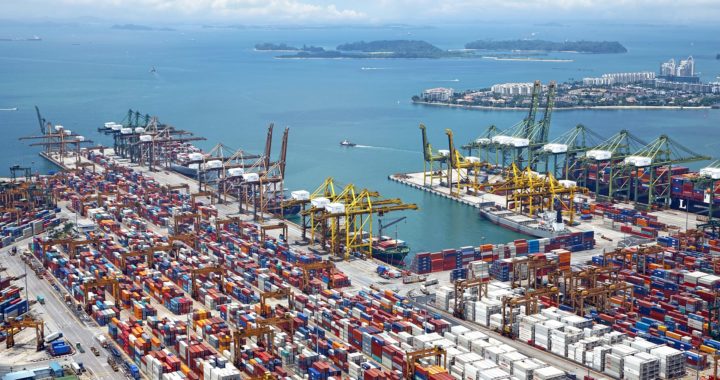
Choosing Ocean Shipping Companies
Choosing the right ocean shipping company is key to having…
Online Order Fulfillment
Order fulfillment business has created a shortage in warehouse space…